Watercolor Lavender Arrangement Clipart Review
As a designer who has spent years translating digital art into tangible thread, I approach every new asset with a critical eye. When I first opened the file for Watercolor Lavender Arrangement Clipart, my immediate reaction was one of cautious optimism. The soft, blended aesthetic of watercolor is notoriously difficult to replicate in embroidery, where thread creates distinct lines rather than fluid washes. However, this particular arrangement offers a promising balance between artistic flair and structural integrity, making it a viable candidate for specific types of projects.
The First Impression: Mood and Visual Personality
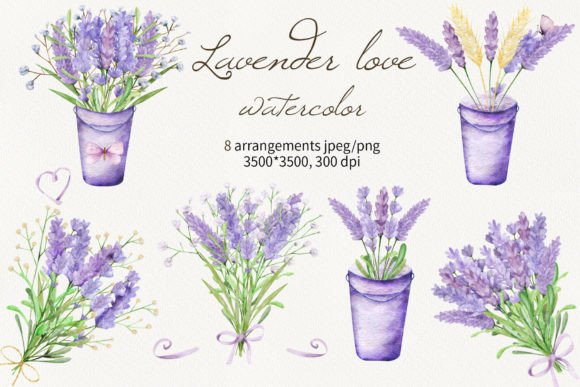
The visual personality of Watercolor Lavender Arrangement Clipart is undeniably gentle and organic. Unlike rigid geometric patterns or sharp vector line art, this design leans heavily into the romantic and soothing side of floral aesthetics. The layout feels balanced, with the lavender sprigs cascading in a way that suggests movement without chaos. For an embroidery project, this mood translates well into products meant for relaxation, self-care, or delicate gifting.
However, the "watercolor" effect in the original illustration relies on gradient transitions that do not exist in standard thread colors. As a reviewer, I immediately began mentally converting these gradients into stitch types. To achieve a similar look, one would need to rely heavily on fill stitch with carefully selected color blending, or perhaps a combination of satin stitch for definition and loose fill for the softer areas. The challenge lies in maintaining the dreamy quality of the Illustrations category while ensuring the final stitched result does not look muddy or overly dense.
Real-World Application: From File to Fabric
Let's talk about a real-life scenario. Imagine you are preparing a custom embroidered tote bag for a local boutique client who wants a spring collection. You select Watercolor Lavender Arrangement Clipart because it fits their brand identity perfectly. In this context, the design shines. Tote bags typically use canvas or heavy cotton duck, which provides a stable base for intricate floral work. The larger scale of a tote allows you to utilize a generous hoop size, giving the lavender stems room to breathe and preventing the stitches from bunching up.
In this application, the design becomes a focal point. Customers browsing at a craft fair or scrolling through an Etsy seller listing would be drawn to the soft purple hues against a natural fabric background. It elevates the item from a simple utility bag to a stylish accessory. Similarly, if you were creating a personalized gift like a pillow cover or a kitchen towel, the gentle nature of the lavender makes it suitable for home decor. It adds a touch of sophistication without being overwhelming.
For custom apparel, such as a sweatshirt or a baby onesie, the placement is key. On a sweatshirt embroidery project, placing this arrangement on the chest pocket area or the back yoke works well. The softness of the design complements the cozy texture of fleece. For baby embroidery, the non-threatening, calming colors make it an excellent choice for nursery decor or blankets, provided the stitching is smooth enough not to irritate sensitive skin.
Navigating Challenges: Where Caution Is Needed
While the potential is high, there are scenarios where Watercolor Lavender Arrangement Clipart requires careful handling. One major concern is using this design on dark fabrics. Watercolor effects often rely on light tones and transparency. If you attempt to stitch this on black denim or navy wool without significant adjustments, the lighter purples may get lost, and the white highlights might look dirty rather than bright. You would likely need to add a backing layer of white fill stitch or use a different stabilizer strategy to ensure visibility.
Another critical factor is the stitch density. Because the original clipart mimics a painting, it may have areas of low contrast that translate poorly into thread. If the design file has too many tiny details or overlapping translucent layers, the machine might struggle to stitch them cleanly, leading to puckering or thread breaks. This is particularly risky on stretchy fabrics like jersey or thin materials like silk. The tension required to hold the complex floral shapes could distort the fabric.
Furthermore, consider the curved surfaces of caps or hats. While a small version of this arrangement could work on a cap front, the flowing nature of the lavender sprigs might not conform well to the curved bill or the structured crown. Distortion can ruin the illusion of the watercolor style, making the design look stretched or misshapen. In such cases, a simpler, more compact version of the design would be safer.
Practical Designer Notes for Success
Before committing to a commercial run or a client order, I always recommend a rigorous testing phase. Here are my practical notes for working with this specific asset:
- Test on Scrap Fabric: Never skip this step. Stitch out Watercolor Lavender Arrangement Clipart on the exact fabric you plan to use. Check how the thread lays and whether the "watercolor" blend looks intentional or messy.
- Review Color Contrast: Compare light and dark fabric backgrounds. You may need to adjust the thread colors in your digitizing software to ensure the lavender pops against the material.
- Inspect Small Details: Zoom in on the smallest leaves and stems. If they are too fine, they may not stitch clearly. Consider simplifying these elements to maintain clarity in the finished product.
- Use Proper Stabilizer: Given the potential density of floral fills, a cut-away stabilizer is often better than tear-away for long-lasting results, especially on items that will be washed frequently.
- Check Licensing: Always confirm the licensing terms before selling finished items or digital products. Ensure you have the right to use this machine embroidery design for commercial embroidery purposes.
- Mockup Verification: Test the design in black and white mockups first. Sometimes, color hides issues with spacing and flow that become obvious when stripped down to grayscale.
Impact on Brand and Customer Trust
Ultimately, the decision to use Watercolor Lavender Arrangement Clipart affects more than just the look of a single item; it influences your brand's perception. A well-executed floral design signals attention to detail and artistic capability. For a small shop product or a handmade product line, this level of quality builds customer trust. Buyers associate clean, thoughtful stitching with professionalism.
Conversely, a poorly adapted design can lead to returns or negative reviews. If the watercolor effect looks like a mistake or if the threads tangle due to poor density, it undermines the value of your work. By taking the time to adapt this digital embroidery file correctly, you ensure that the product value remains high. Whether you are creating a holiday gift, a wedding favor, or inventory for a boutique, the goal is to deliver a piece that feels premium and intentional.
In conclusion, Watercolor Lavender Arrangement Clipart is a versatile asset that, when handled with care, can elevate a wide range of projects. It is best suited for medium-to-large hoop sizes on stable fabrics where its soft aesthetic can truly shine. By respecting the limitations of thread and fabric, and by adhering to best practices in testing and digitizing, you can turn this beautiful illustration into a profitable and visually stunning reality.